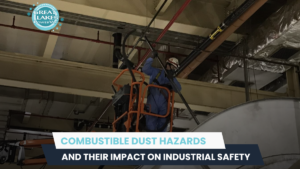
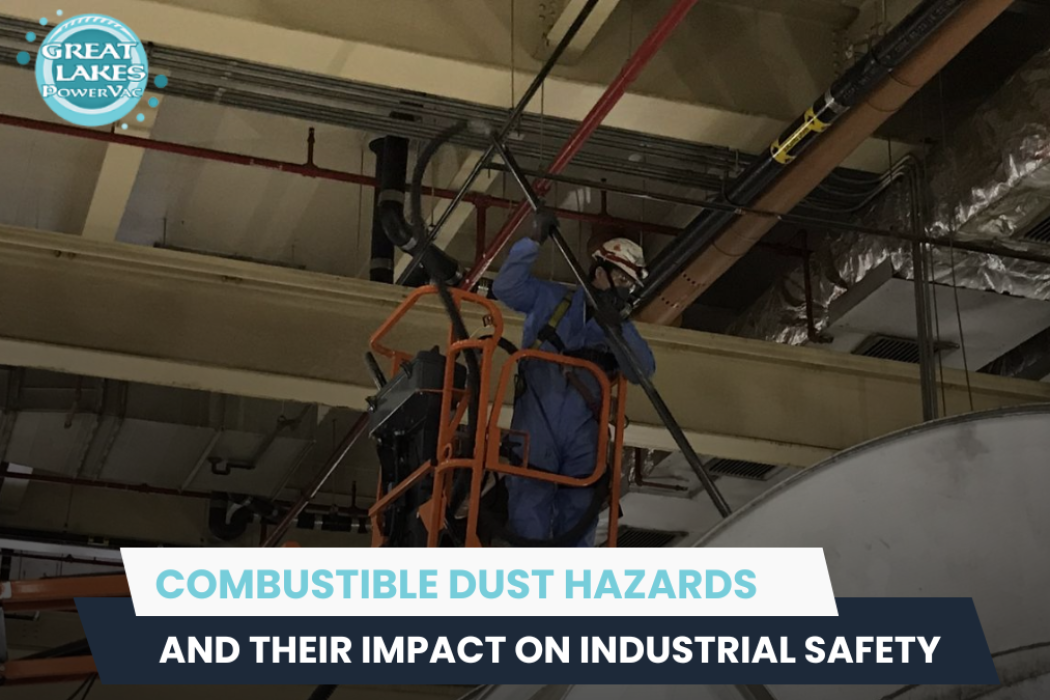
Combustible dust hazards are something most facility managers never think about until something forces them to. I visited a wood processing plant not long ago that was very dusty, with piles of dust on many horizontal surfaces throughout the building. Cable trays, light fittings, motors, beams. The maintenance supervisor pointed it out himself and characterized it as a housekeeping issue. He was not wrong as such but was completely missing the point. That dust sitting quietly on those surfaces wasn’t just messy. It was dangerous in a way that most people in that building didn’t fully appreciate. At Great Lakes Power Vac, we go into industrial facilities all the time and what we find sitting on surfaces in some of them genuinely concerns us.
What Combustible Dust Is and Why It Behaves Differently
Most people understand that things like coal and grain can burn. What surprises them is how dramatically the behavior changes when those materials get reduced to fine particles.
A solid chunk of wood burns slowly. In the same manner, if the same wood is ground down to its finest powder and the appropriate concentration of dust suspended in air, an explosion with a serious destructive potential is possible. The reaction of the material to heat and ignition will change depending on particle size.
Many are surprised that the list of materials that create hazardous combustible dust is exceedingly long. Fruits, vegetables, plants, particles, wood, grain, sugar, flour, coal, metal powders such as aluminum and magnesium, plastics, pharmaceutical ingredients, and many chemical compounds qualify during the normal processing or handling operations.
The Mechanics Behind a Dust Explosion
Five things have to exist at the same time for a dust explosion to occur. The dust itself as the fuel source. Oxygen from the air around it. An ignition source of some kind. The dust dispersed into a suspended cloud rather than sitting on a surface. And confinement of that cloud in an enclosed space.
Safety professionals call this combination the Dust Explosion Pentagon.
What makes dust explosions particularly devastating is the secondary explosion. A first explosion shakes off all the dust that’s been lurking around all over the facility. After the initial explosion, material instantly goes airborne and creates a secondary explosion that is bigger and more destructive than the initial one. Buildings have been leveled this way. The initial explosion wasn’t the main event. The secondary one was.
Even if nothing appears to be suspended in the air, surface accumulation is considered a serious risk, the reason being it might result in an accident. It’s waiting for you.
Industries That Deal With This Most
Combustible dust hazards show up across a wide range of industries. Some deal with higher concentrations and more frequent exposure than others.
| Industry | Common Dust Sources |
| Agriculture and Food Processing | Grain, flour, sugar, starch, dried milk |
| Woodworking and Furniture | Wood dust, sawdust, MDF particles |
| Metal Processing | Aluminum, magnesium, iron, zinc |
| Chemical Manufacturing | Various organic and inorganic compounds |
| Pharmaceuticals | Active ingredient powders, excipients |
| Plastics and Rubber | Resin powders, compounding materials |
| Coal and Mining | Coal dust, mineral particles |
| Textiles | Cotton, linen, synthetic fiber dust |
Every industry on that list has had serious dust explosion incidents at real facilities with real people who didn’t go home. The grain elevator explosions in the agriculture sector alone have been catastrophic over the decades. These aren’t hypothetical risks being discussed by people who have never seen one happen.
What the Regulations Say
Dust that is combustible is hazardous and regulated seriously within the USA owing to the documented history of incidents that cannot be denied.
The General Duty Clause and various industry-specific standards are used to enforce combustible dust safety by OSHA. The NFPA 652, Standard on the Fundamentals of Combustible Dust, was published by NFPA (National Fire Protection Association). It contains detailed information on dust hazard analysis standards, housekeeping standards, and control measures.
At Great Lakes Power Vac, we work with facilities navigating these compliance requirements regularly. There’s a significant gap between what compliance looks like on paper and what it actually requires in a real working facility and we understand both sides of that.
According to the Occupational Safety and Health Administration, more than 130 combustible dust explosions occurred in the United States over a recent ten-year period. Hundreds of innocent people lost their lives during these attacks. In all of these cases, dust accumulated to such a level that it was deemed dangerous, but that was ignored.
Housekeeping Is the Foundation and There Is No Substitute
No engineering control and no explosion suppression system replaces the need to keep dangerous dust from accumulating on surfaces in the first place. Housekeeping is where the whole prevention program starts.
The challenge is that dust accumulates constantly in active industrial facilities. It settles on overhead beams, on top of motors, inside ductwork, on ledges, and in spaces that nobody visits regularly. Standard cleaning methods create new problems instead of solving the existing one. Dry sweeping and blowing with compressed air take settled dust and send it back into suspension as an explosive cloud. That is the exact condition everyone is trying to prevent.
Cleaning combustible dust safely means capturing and removing it completely rather than moving it from one surface to another. Industrial vacuum systems designed and rated specifically for combustible dust do this properly. They pull material off surfaces and contain it without creating airborne concentrations during the cleaning process.
How often cleaning needs to happen depends on how quickly dust actually accumulates in that specific facility. High-production environments sometimes need critical surfaces cleaned every day. A schedule based on the calendar rather than actual accumulation rates often leaves facilities in a dangerous state between cleaning cycles.
Engineering Controls That Reduce How Much Dust Escapes
Housekeeping alone isn’t sufficient in facilities with significant ongoing dust generation. Engineering controls reduce how much dust reaches surfaces in the first place and that makes the whole management task more achievable.
Dust collection systems capture material at the point of generation before it disperses through the facility. The maintenance of those systems is critical. A dust collector that isn’t properly maintained can itself become a source of ignition or an explosion point if combustible dust builds up inside it over time.
Equipment enclosures keep dust from machining and processing operations contained in specific areas rather than spreading through the whole building. Ventilation design affects where dust travels and where it settles. Facilities with properly engineered ventilation can slow down accumulation rates significantly compared to those without it.
Minimizing flat horizontal surfaces where dust can sit undisturbed is worth considering during new construction or major renovations. Sloped surfaces and rounded profiles on structural elements make cleaning faster and reduce the number of places dust can build up quietly.
Managing Ignition Sources
Taking ignition sources away from areas with combustible dust present addresses the trigger side of the problem. Dust accumulation creates the fuel. Ignition sources provide the spark.
Open flames, welding and cutting operations, overheated equipment, electrical sparks, static electricity buildup, and frictional wear and tear of mechanical equipment are common causes of ignition in an industrial unit. Every one of them needs active management in facilities dealing with combustible dust regularly.
Hot work permits for any welding or cutting in areas with dust contamination are a basic requirement that sometimes gets treated as a formality. Equipment inspections to catch overheating components before they become a problem matter just as much. Electrical equipment in dust-hazard areas needs to be rated for the specific hazard classification of that space.
Static electricity deserves particular attention in facilities handling fine powders. Static can build up gradually and discharge suddenly in a way that ignites a dust cloud without any other obvious trigger being present.
When Dust Has Already Built Up Significantly
If a facility has let dust accumulate to the point where a serious cleaning effort is well overdue, the cleaning process itself needs careful management. Done carelessly, the cleaning operation can create the very conditions it is trying to eliminate.
Blowing things down with a compressed air hose is not the answer. Disturbing accumulated combustible dust aggressively without proper containment is how secondary explosions get triggered during what was supposed to be routine maintenance.
Industrial vacuum equipment used for combustible dust environments safely collects material from surfaces without creating explosive clouds. In places that are difficult to reach and have high accumulation, it is advisable for bringing a specialized cleaning service with appropriate facilities rather than using whatever tools they have.
Great Lakes Power Vac handles industrial cleaning for facilities dealing with accumulated combustible dust. Our team understands the specific risks involved and our equipment is appropriate for the hazard level these situations involve.
FAQs
Q: How much dust accumulation is actually dangerous?
A: NFPA 652 uses 1/32 of an inch depth over a significant surface area as a reference threshold for dangerous accumulation. Any visible dust on horizontal surfaces should be taken seriously rather than dismissed as just a mess.
Q: Is wood dust really that explosive?
A: Yes. Wood dust is one of the most common causes of industrial dust explosions. Fine wood dust suspended in air can detonate with real destructive force under the right conditions.
Q: Can a regular shop vacuum be used to clean combustible dust?
A: No. Standard vacuums are not rated for combustible dust and can themselves become ignition sources. Only equipment specifically designed and rated for combustible dust environments should be used.
Q: What is a Dust Hazard Analysis?
A: It is a systematic review of a facility to identify where combustible dust hazards exist, how serious they are, and what controls are needed. NFPA 652 requires facilities to complete one.
Q: Does OSHA have a specific combustible dust standard?
A: OSHA currently addresses combustible dust primarily through the General Duty Clause and some industry-specific standards. NFPA 652 provides the most detailed technical guidance available.
Conclusion
Hazards from combustible dust don’t warn you before things go wrong. They creep onto surfaces as their body of work mounts up over weeks and months as everyone else carries on with their normal work. Many facilities where severe dust explosions took place were not poorly run operations managed by less-than-caring people. A large number of them either simply had no idea how serious the accumulation had become or what it would take to trigger it.Housekeeping with proper equipment, engineering controls to limit fugitive dust emissions, and continued control of ignition sources are what separates facilities that have incidents from those with continued success in preventing the incidents. If your facility needs accumulated combustible dust removed safely and properly, visit Great Lakes Power Vac and talk to people who understand combustible dust hazards at a practical level and have the equipment and experience to handle industrial cleaning the right way.