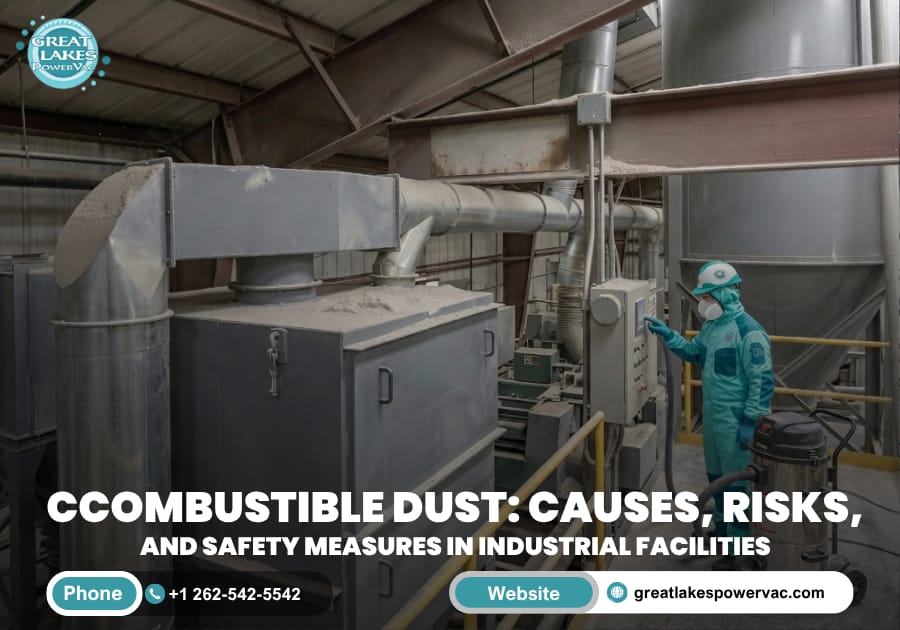
Most facility managers have seen it. A thin grey layer coating the tops of steel beams. Fine powder settled along the base of conveyor lines. Dust sitting in the corners of a woodworking shop that nobody got around to cleaning last week. It looks harmless. Honestly, it looks boring.
But combustible dust has killed people in facilities that looked exactly like that – places where the dust was visible, where people walked past it every day, and where nobody thought it was urgent enough to deal with properly.
The 2008 Imperial Sugar refinery explosion in Georgia killed fourteen workers and injured dozens more. Investigators traced it back to sugar dust that had accumulated under conveyors and in enclosed spaces. The 1999 explosion at a foundry in Massachusetts killed three people. Wood dust. A grain elevator in Kansas. A pharmaceutical plant in New Jersey. The list is long, and it stretches across industries that could not be more different from each other – except for one shared factor.
That factor is combustible dust, and if your facility generates, handles, or processes any kind of solid material, you need to understand it.
What Actually Makes Dust Combustible?
Here is the part that surprises a lot of people. It is not the material itself that creates the explosion hazard – it is the particle size.
Take aluminum as an example. A solid aluminum bar sitting on a workbench is not going to explode. But grind that same aluminum into fine particles, let those particles build up on surfaces, and then disturb them – suddenly you have an invisible cloud of metal dust hanging in the air, and all it needs is a single spark to ignite.
The same principle applies to wood, grain, sugar, coal, plastics, pharmaceuticals, and dozens of other materials. When solid materials are broken down into particles small enough to stay suspended in air – generally under 420 microns, roughly the size of a fine grain of sand – they behave more like a flammable gas than a solid. They mix with oxygen throughout the air column, and when an ignition source touches that cloud, the combustion happens almost instantaneously across the entire suspended mass.
That speed is what makes combustible dust explosions so devastating. A gas explosion moves fast. A dust explosion, in the right conditions, can be faster – and the pressure wave it generates can bring down structural walls, blow out windows across an entire building, and collapse roofs in seconds.
The Five Factors That Have to Line Up
Fires need three things: fuel, oxygen, and an ignition source. That is the classic fire triangle that most people learned somewhere along the way.
Dust explosions need five things – and understanding all five is essential for designing controls that actually work.
| Factor | What It Means in Practice |
| Fuel | The combustible dust itself |
| Oxygen | Present in normal workplace air |
| Ignition Source | Sparks, heat, static, open flame |
| Suspension | Dust dispersed in air at the right concentration |
| Confinement | An enclosed space where pressure can build |
Remove any one of these five factors and you cannot have an explosion. That is the entire logic behind dust safety engineering – systematically attack each factor so that all five can never come together at the same time.
The challenge is that in a real industrial facility, the first three factors are almost always present. Dust is generated by the process. Oxygen is everywhere. Ignition sources – electrical equipment, friction from machinery, static buildup, even a hot surface – are hard to eliminate entirely. That is why controlling dispersion and confinement through engineering and housekeeping is where most of the real safety work happens.
Where Combustible Dust Builds Up – And Why It Is Easy to Miss
One of the reasons combustible dust incidents keep happening even in facilities with safety programs is that dust does not accumulate where people are looking. It accumulates where people are not looking.
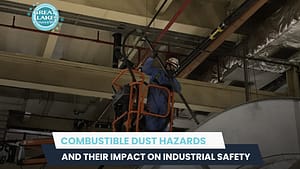
Floors get swept. That is the obvious place. But dust travels. Air currents from equipment, ventilation systems, and foot traffic carry fine particles throughout a building. They settle on top of overhead beams and pipe runs. They collect inside electrical panel cabinets. They pack into the corners of ductwork. They build up on top of ceiling tiles and inside wall cavities near process equipment.
When the primary explosion happens – maybe from an equipment malfunction, maybe from a static discharge nobody noticed – the pressure wave travels through the building and disturbs all of that settled dust simultaneously. Every surface that was carrying a dust load suddenly releases it into the air. That suspended cloud ignites from the flames of the primary event, and the secondary explosion that follows is almost always larger.
Most of the fatalities in industrial dust incidents are caused by secondary explosions, not the initial event. Which means that facilities which focus only on preventing ignition at the source, while ignoring dust accumulation on overhead surfaces, are managing the wrong problem.
At Great Lakes Power Vac, this is something the team understands from direct experience in industrial facilities – dust removal has to cover every surface, not just the ones at eye level.
Industries Where the Risk Is Highest
Combustible dust is a cross-industry problem, but some sectors carry a heavier burden than others simply because of the volumes of dust their processes generate and the nature of the materials involved.
Grain and Feed Handling: Grain elevators are arguably the highest-risk environment for dust explosions in North America. The combination of enormous dust volumes, enclosed vertical structures, and mechanical equipment creates near-constant risk conditions. NFPA 61 exists specifically because of how severe and recurring this problem has been historically.
Wood Products Manufacturing: Cabinet shops, furniture plants, flooring manufacturers, and lumber mills produce fine wood dust in large quantities throughout the shift. Wood dust ignites easily and burns hot.
Metal Fabrication: Aluminum and magnesium dusts are among the most reactive combustible materials encountered in industrial settings. Facilities grinding, cutting, or polishing these metals need to treat their dust as a primary hazard, full stop.
Food Processing: Sugar, starch, flour, dried milk, and cocoa powder are all combustible in fine particle form. The Imperial Sugar disaster is the most prominent reminder of what happens when this risk is underestimated.
Plastics and Rubber: Grinding, pelletizing, and conveying plastic materials releases fine particles that build up quickly and are often overlooked because the bulk material does not seem particularly dangerous.
Engineering Controls That Address the Root Cause
The most reliable safety controls are the ones that work regardless of whether a worker remembers to follow a procedure. Engineering controls fall into that category – they are built into the facility and the equipment, and they do their job continuously.
Source Capture Dust Collection: A well-designed dust collection system captures particles at the point of generation before they can disperse into the workspace. The critical word is well-designed. An undersized or poorly maintained collector does not just fail to protect the facility – it can concentrate combustible dust in one location and become an explosion hazard itself.
Explosion Venting on Enclosed Equipment: Dust collectors, silos, bins, and hoppers should be fitted with explosion vents that are sized and positioned to direct a blast away from occupied areas. When an ignition occurs inside a piece of equipment, the vent opens and releases the pressure before it can build to structural failure levels.
Static Bonding and Grounding: Static electricity builds up on equipment, on containers being filled with powder, and on workers moving through dusty environments. Proper bonding and grounding provides a controlled path for that charge to dissipate harmlessly rather than jumping as a spark through a dust cloud.
Inerting Systems: In the highest-risk enclosed processes, nitrogen or carbon dioxide is introduced to reduce oxygen concentration below the level required for combustion. No oxygen means no explosion, regardless of how much dust is present.
Why Industrial Vacuuming Is a Safety Function, Not a Cleaning Chore
This point deserves more emphasis than it usually gets. Regular, thorough vacuuming of all surfaces in a facility that handles combustible dust is not a housekeeping task – it is a safety-critical function that directly reduces explosion risk.
The mistake many facilities make is using compressed air to blow down dusty surfaces. It seems efficient. It clears the visible dust quickly. But what it actually does is take settled dust and suspend it in the air, temporarily creating exactly the kind of dispersed dust cloud that can trigger an explosion. If any ignition source is active anywhere in the area during a blowdown – a running motor, a light switch being flipped, a forklift nearby – the conditions for a disaster are complete.
Industrial vacuum systems remove dust from surfaces without dispersing it. The dust goes from the surface directly into the collection system, captured and contained.
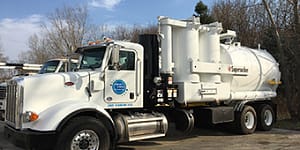
Great Lakes Power Vac specializes in industrial vacuuming for facilities where combustible dust is a recognized hazard – using equipment and procedures that meet safety standards and address the hidden accumulation points that routine cleaning programs miss.
What OSHA and NFPA Require From Your Facility
Understanding your regulatory obligations gives you a framework for building a dust safety program that covers what it needs to cover.
NFPA 652 is the foundational standard. It requires all facilities that handle combustible dust to conduct a formal Dust Hazard Analysis – a systematic review of processes, materials, dust generation points, accumulation areas, and ignition sources. The DHA is not optional. It is the document that drives everything else in your safety program.
NFPA 654 applies to general manufacturing environments and provides specific requirements for housekeeping frequency, ignition control, and equipment design in facilities where combustible dust is present.
OSHA enforces combustible dust requirements primarily through the General Duty Clause and through sector-specific standards for grain handling. Penalties for serious violations are substantial, but the more important consequence of non-compliance is what happens when an incident occurs in a facility that was not meeting its obligations.
Frequently Asked Questions
Q: How fine does dust have to be before it becomes a combustible hazard?
A: Generally, particles under 420 microns are considered potentially combustible. Finer particles tend to be more hazardous because they stay suspended in air longer and ignite more easily.
Q: Is combustible dust only a risk in large industrial plants?
A: No. A small woodworking shop or a bakery can experience a devastating dust explosion. Facility size does not reduce the hazard – the material and the conditions determine the risk.
Q: Why are secondary explosions more dangerous than the initial blast?
A: The primary explosion disturbs all the settled dust in the surrounding area, sending it airborne at once. That larger suspended cloud ignites from the primary event flames, producing a much bigger explosion.
Q: How often should dust be removed from overhead surfaces?
A: It depends on how fast dust accumulates in your specific facility. A Dust Hazard Analysis will help determine appropriate inspection and cleaning intervals for different areas.
Q: Can regular shop vacuums be used for combustible dust cleanup?
A: No. Standard shop vacuums are not rated for combustible dust environments and can themselves become ignition sources. Industrial vacuum equipment designed for hazardous dust is required.
Q: What is the first step in building a combustible dust safety program?
A: Conduct a Dust Hazard Analysis as required by NFPA 652. That analysis identifies your specific risks and drives every control measure that follows.
Conclusion
Combustible dust does not give warnings. It does not look dangerous. It sits quietly on overhead beams and inside ductwork and on top of equipment cabinets, and it waits for the conditions to come together. Those conditions – dust in the air, an ignition source, an enclosed space – are present in industrial facilities every single working day.
The facilities that avoid disasters are not the ones where nothing ever goes wrong mechanically. They are the ones where management takes dust accumulation seriously enough to address it systematically – through proper engineering controls, regular industrial vacuuming of all surfaces, formal hazard analysis, and a genuine culture of safety that does not treat dust as a low-priority housekeeping issue.Every surface in your facility that is carrying a dust load right now is contributing to your explosion risk. Dealing with combustible dust seriously, consistently, and completely is one of the most important things an industrial facility can do to protect the people who work there.