Some things just don’t clean up easy. Industrial deposits – rust, scale, grease, hardened concrete, chemical residue – they grip surfaces like they belong there. Regular cleaning doesn’t touch them. Chemicals sometimes help but not always. Manual scrubbing takes forever. That’s where high pressure water blasting comes in. It uses pure water force to rip deposits off surfaces fast, clean, and without wrecking what’s underneath. This guide explains how it works, what it removes, and why industries rely on it for their toughest cleaning jobs.
What Is High Pressure Water Blasting
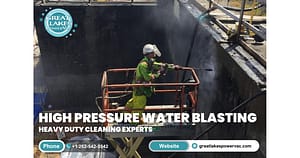
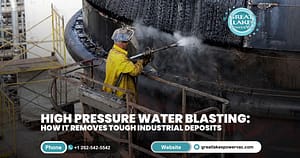
Plain and simple – it’s water fired at extreme pressure through a nozzle.
We’re not talking about a garden hose. Industrial water blasting runs at pressures between 10,000 and 40,000 PSI. Sometimes higher. At that kind of force, water doesn’t rinse a surface. It destroys whatever’s stuck to it.
No chemicals. No abrasive grit. Just water moving fast enough to do serious work.
It’s used in oil and gas, manufacturing, food processing, construction, marine industries, and more. Anywhere tough deposits build up and nothing else gets them off properly.
Great Lakes Power Vac runs high pressure water blasting jobs across industrial sites – the kind of work where the deposits are heavy and the stakes are real.
How It Actually Works
The idea is simple. The execution takes proper equipment and trained hands.
The Equipment
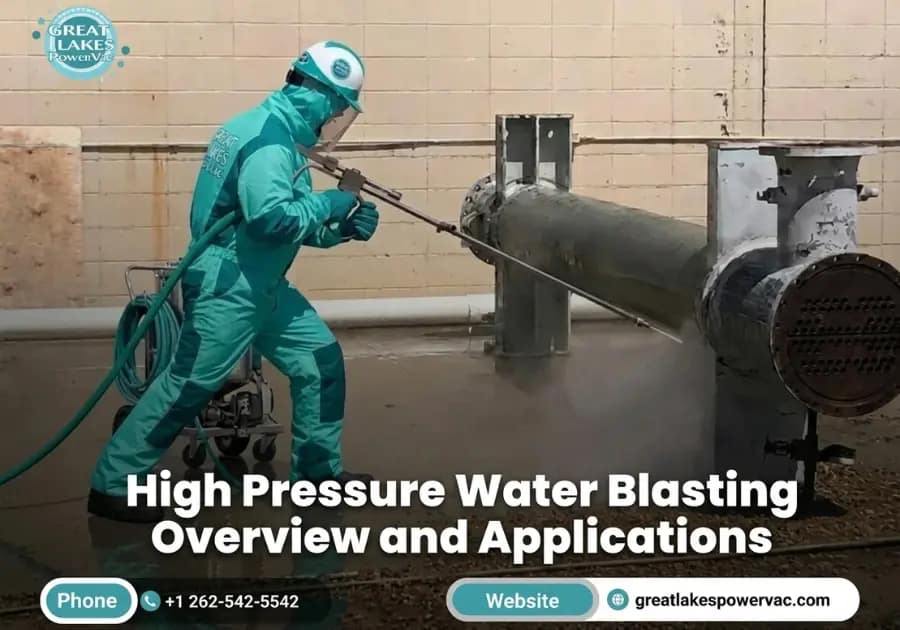
A high pressure pump takes in normal water and pushes it out at extreme force. It travels down a hose and out through a nozzle. Different nozzles do different things. A wide fan covers large flat surfaces. A pencil jet hits a tight spot with precision. A rotating head cleans inside pipes and tubes.
Pressure Levels – What Does What
Not every job needs the same pressure. Here’s a simple breakdown:
| Pressure Range | What It’s Called | Where It’s Used |
| 3,000 – 5,000 PSI | Pressure washing | Light cleaning, vehicles |
| 5,000 – 10,000 PSI | High pressure washing | Industrial equipment surfaces |
| 10,000 – 25,000 PSI | High pressure water blasting | Scale, rust, coating removal |
| 25,000 – 40,000+ PSI | Ultra high pressure | Concrete cutting, heavy deposits |
Too little pressure and the deposit laughs at you. Too much and you damage what you’re trying to clean. Getting it right takes experience.
The Operator
This part matters more than people realise. A trained operator controls the angle, distance, pressure, and movement during high pressure water blasting. They know when to push harder and when to back off. That knowledge is what separates a clean result from a damaged surface.
What Deposits Does It Actually Remove
This is where high pressure water blasting earns its reputation. It handles things that chemicals struggle with and that manual methods can’t finish in any reasonable time.
Scale and Mineral Buildup
Pipes, boilers, heat exchangers – mineral scale builds up inside all of them. It reduces flow. It kills efficiency. Water blasting breaks it apart and flushes it out completely.
Rust and Corrosion
Rust spreads. Left alone it weakens metal and eventually destroys it. Blasting strips rust back to bare metal fast – ready for coating or repair.
Heavy Grease and Oil
Thick industrial grease hardens over time. It traps debris. It becomes a fire risk. High pressure water blasting cuts through it in a fraction of the time any other method takes.
Hardened Concrete and Cement
Construction equipment, mixers, floors, and formwork get coated in concrete that sets like stone. Water blasting removes it cleanly without touching what’s underneath.
Old Coatings and Paint
Before any surface gets repainted or recoated, the old layer has to come off completely. Water blasting strips paint, epoxy, and protective coatings right down to bare substrate.
Chemical and Process Residue
Food plants, pharmaceutical facilities, chemical processing sites – residue from production builds up in tanks, vessels, and pipelines. Water blasting removes it thoroughly. And because no cleaning chemicals are added, there’s no risk of contamination from the cleaning process itself.
The Water Jet Technology Association sets safety and performance standards for water blasting operations used by professional contractors worldwide. Their guidelines are the industry benchmark.
Industries That Use It Most
Oil and Gas
Refineries and pipelines deal with heavy deposits constantly. Scale inside heat exchangers drops efficiency fast. Regular blasting keeps everything running the way it should.
Manufacturing
Production equipment gets coated in process material over time. Buildup affects quality and machine life. Scheduled water blasting keeps lines running clean.
Marine and Shipbuilding
Marine growth on vessels increases fuel consumption and creates extra drag. Blast cleaning removes it swiftly and preps surfaces for antifouling paints.
Food and Beverage
Hygiene isn’t optional in food production. Water blasting removes organic buildup from equipment, drains, and vessels – with zero chemical residue left behind.
Construction and Civil
Bridges, tunnels, car parks, and industrial floors collect grime, oil, and debris over years. High pressure water blasting restores them without causing structural damage.
Why It Beats Other Cleaning Methods
There are plenty of ways to clean industrial surfaces. Here’s why water blasting comes out on top for heavy-duty jobs:
No chemicals. Water does all the work. No storage, no disposal costs, no risk of chemical damage to equipment or sensitive surfaces.
Much faster. What takes days manually gets done in hours. Less downtime for your operation. Less money lost on idle equipment.
Doesn’t wreck surfaces. Unlike sandblasting, water doesn’t create micro-abrasions that weaken metal over time. The deposit comes off. The surface stays intact.
Cleaner for the environment. No grit. No solvents. Wastewater can be collected and filtered on site. The only waste is what was already stuck to the surface.
Reaches tight spaces. Flexible lances and specialised nozzles get inside pipes, vessels, tanks, and confined areas that nothing else can access properly.
GLPV brings trained crews and proper equipment to every job – because on industrial sites, the right team matters as much as the right machine.
Safety – This Is Serious
High pressure water blasting at industrial pressures is dangerous. Full stop.
Water at 20,000 PSI cuts through skin instantly. This is not a DIY job. It is not a corner-cutting job. It needs certified operators who know exactly what they’re doing.
Here’s what proper safety looks like on site:
- Full waterproof PPE – suits, face shields, gloves, steel-capped boots
- Equipment checked before every single job
- Exclusion zones around all active blasting areas
- Emergency shutoffs tested and within reach
- Wastewater contained and managed properly
- Only trained, certified operators handling equipment
Skipping any of this isn’t just reckless. On an industrial site, it’s how people get seriously hurt.
FAQs
What’s the difference between pressure washing and high pressure water blasting?
Pressure washing runs at low PSI – fine for cars and patios. Water blasting runs far higher for industrial-grade deposits.
Will it damage the surface underneath?
Not when done right. Trained operators match pressure to the surface. Wrong pressure or angle causes damage – another reason professionals matter.
Can it work inside confined spaces?
Yes. Specialised lances and nozzles are built for exactly that. Proper safety protocols apply.
How long does a typical job take?
Depends on the area and deposit. Most industrial jobs that would take days manually are done in hours.
What happens to the wastewater?
It needs proper management. Good contractors contain and collect runoff – especially on sites with environmental compliance requirements.
Conclusion
Heavy industrial deposits don’t move without serious force. Chemicals help sometimes, but manual cleaning takes too long. Nothing matches the speed and thoroughness of high pressure water blasting when the job is genuinely tough. It strips rust, scale, grease, concrete, coatings, and chemical residue faster and cleaner than almost anything else. It does it all without chemicals, surface damage, or days of downtime.
Oil refineries, food plants, shipyards, and construction sites all rely on it for the same reason. It works when nothing else does. If your equipment is building up deposits, high pressure water blasting is the place to start. Just make sure the team handling it knows exactly what they’re doing.