If you’ve seen a crew excavate near buried utility lines, you know how nerve-wracking that can be. A wrong move could endanger you to rupture a gas line, snap a fibre-optic cable or worse yet, injure someone badly. This is what happens with digging the traditional way. It is often full of risk. The hydro excavation procedure completely transforms that. It allows contractors and facility operators to excavate accurately without taking a chance with underground infrastructure. Due to the hydro excavation process project managers are adopting and using a lot more. Moreover, the hydro excavation process is becoming easier to use as you would think. Also, it is useful to the people engaged in heavy machinery jobs.
What Is the Hydro Excavation Process?
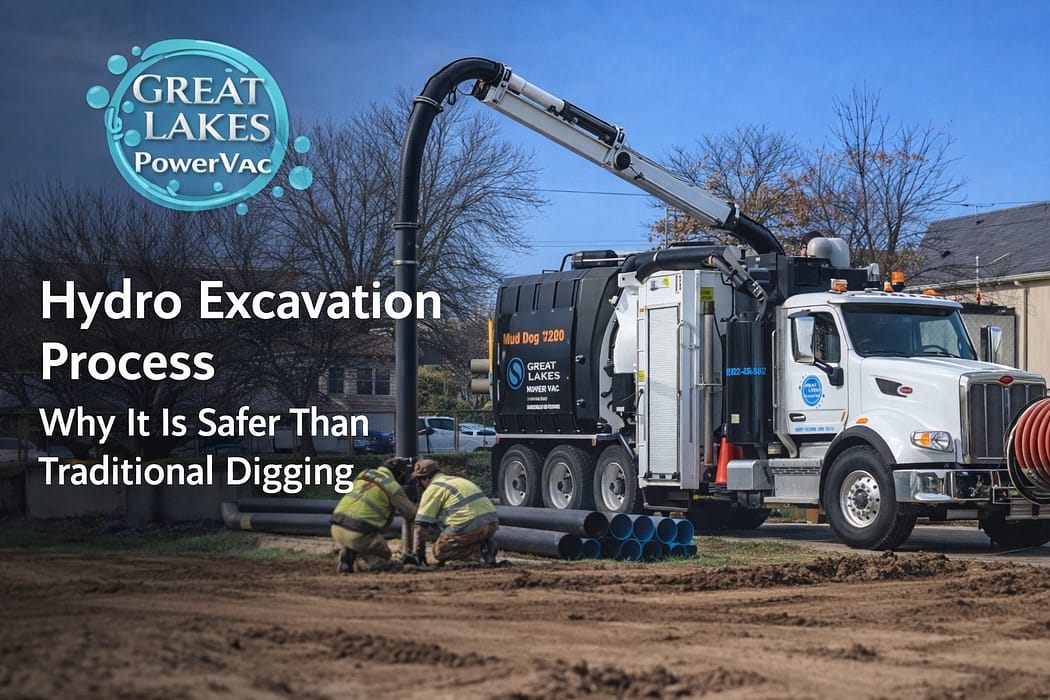
Hydro excavation uses a high power vacuum and pressurized water in order to break up the soil and safely remove it. No blades are present. There will be no teeth tearing through the ground. All that is needed is just water pressure to loosen the soil and a vacuum. Excavation is cleaner and more controlled and allows workers to see what is beneath earth in real time. Traditional mechanical digging cannot offer that sort of visibility.
How the Hydro Excavation Process Works Step by Step
Site Assessment First
Before any digging begins, the crew does a proper site assessment. They inspect utility maps, execute dig-safe notifications and determine precisely where underground infrastructure runs. Just this step alone prevents a lot of mistakes before you even get started.
Water Breaks the Ground
The underlings work hard with high-pressure water wandering on the soil. The type of soil and the proximity of the nearest utility lines determine how pressure is to be adjusted. Soil, sand, and compacted earth mix together to form a loose slurry very quickly. The operator controls the intensity of the water pressure, adjusting it according to the patient’s needs.
Vacuum Pulls Everything Out
This is where we get things done. A large vacuum hose running parallel to the water loosens the dirt and sucks up the sludge into a debris tank on the hydrovac truck. Soil does not merely accumulate yet below the hole that is being dug. It is taken away instantly, thereby keeping the excavation clean and the surroundings intact.
Material Gets Stored Properly
Everything that you vacuum gets sent to the truck’s debris tank. The job remains there until it is done. Depending on the project, the same soil can sometimes be reused as backfill once the underground work is complete. Otherwise it gets hauled away for proper disposal.
Minimal Restoration Needed
Due to the precision of the procedure, there is a very small mess left. The area next to the excavation remains intact. Backfilling and restoration work takes far less time compared to a traditional dig site, which often looks like a small war zone by the time the mechanical equipment is done with it.
Traditional Digging vs. the Hydro Excavation Process
Here is the honest truth about traditional mechanical digging. Backhoes and trenchers are powerful machines. Nobody is questioning that. But power without precision is a problem when you are working anywhere near buried utilities. These machines cannot sense what is below them. They work on estimates and markings, and those markings are not always 100% accurate.
According to the Common Ground Alliance, a buried utility line gets struck every 61 seconds somewhere in the United States. Most of those strikes involve mechanical equipment. That is not a small number. That translates to thousands of incidents every year, with real costs attached to them in repairs, project delays, fines, and injuries.
Hydro excavation process takes the guesswork out. It is possible to control water pressure such that it can loosen soil without damaging plastic piping or cutting electrical conduit. Workers can see into the hole as it forms. If something is down there, they see it before they hit it. That is a fundamental difference and it matters enormously on any job site with underground infrastructure present.
Key Safety Advantages of the Hydro Excavation Process
Utility Strikes Go Down Dramatically
This is the biggest one. Mechanical equipment cannot feel the difference between dirt and a gas line. The hydro excavation process can be dialed in sufficiently that it disrupts soil without damage to what lies just below. Fewer strikes lead to lesser emergencies, shutdowns and liability issues.
Workers Stay Safer
Traditional digging puts workers in close contact with heavy equipment and live utilities at the same time. That is a dangerous combination. With hydrovac work, the operator controls the process from a safer position, and the physical exposure to excavation hazards is significantly reduced.
Trench Walls Stay Stable
One thing people do not think about enough is trench wall stability. Mechanical digging disturbs a much wider area of soil than necessary. That loose, disturbed soil increases cave-in risk. Moreover, cave-ins are one of the top killers on excavation job sites. Because the hydro excavation process only removes exactly the soil it needs to, the surrounding ground stays more intact and walls stay more stable.
No Sparks Near Gas Lines
Metal blades on mechanical equipment can create friction and sparks. Near a natural gas line, that is a genuinely terrifying scenario. Water does not spark. It never will. That makes the hydro excavation process inherently safer in any environment where gas infrastructure runs underground.
Gets Into Tight Spaces
A backhoe needs room to operate. It cannot dig right next to a building foundation or squeeze into a narrow alley between structures. The hydrovac hose and water wand can go almost anywhere. So, under roads, next to existing pipes, inside confined areas, close to structures. That kind of flexibility expands what is possible on complicated job sites.
Industries That Use the Hydro Excavation Process Most
A lot of industries have moved toward this method because of how versatile it is. Utility companies use it constantly for exposing buried lines during repair and installation work. Before undertaking foundation work, construction crews utilize it for slot trenching and potholing. Municipalities utilize it for sewer line access and storm drain maintenance in busy urban areas where you just can’t swing a backhoe around without messing everything up nearby. Industrial facilities use it for pipe installation, tank pad work, and tight maintenance jobs where underground systems are packed closely together.
And in cold climates like Wisconsin, hot water can be used in the process to cut through frozen ground. That makes it a practical year-round solution even when temperatures drop hard in winter.
At Great Lakes Power Vac, we run hydro excavation jobs across Wisconsin and Northern Illinois with fully equipped hydrovac trucks and trained crews who know how to handle projects of every size and complexity.
The Environmental Side of It
This does not get talked about enough. The hydro excavation process is also better for the environment than traditional digging methods. When a mechanical shovel digs, more earth is disturbed than necessary. The added disruption wears down the land, which harms roots of trees and sediments can run off to waterways nearby. By using Hydro Excavation there’s way less disturbance. Only the required soil will be coming out.
We will dispose of the debris tank slurry properly in accordance with the law. We do not leave anything on site to wash away in the rain or sit near a storm drain. For municipalities and industrial facilities that take their environmental obligations seriously, this matters a great deal. Great Lakes Power Vac has always operated with an environmental responsibility mindset. It is part of how we do business.
Clearing Up Some Common Misconceptions
When project owners first consider hydro excavation, a few things still concern them. Some people think it is only suitable for small and delicate jobs, but that is not true. Hydrovac trucks move large volumes of material, and crews regularly use them on major infrastructure projects.
Some think it costs too much. But when you factor in the money saved by avoiding utility strikes, the reduced backfill labor, fewer delays, and lower liability exposure, the numbers typically work out in favor of hydro excavation over the life of a project.
And some assume it is slow. For jobs near sensitive infrastructure, it is actually faster than the constant stop-and-inspect cycle that mechanical digging requires when crew members have to keep stopping to check whether they are about to hit something.
Why Great Lakes Power Vac
Great Lakes Power Vac has spent years building a reputation for doing this kind of work properly. Our hydro excavation crews are experienced, certified, and trained to handle projects that require precision and safety in equal measure. Our clients in Wisconsin and Northern Illinois include utility companies, construction contractors, municipalities, manufacturers and more.
We take every job seriously whether it’s big or small. Our equipment is in good condition, as are our processes. When you choose us, you will get a team that understands that underground there is always more at stake than you think. For industry safety guidelines on excavation, the Common Ground Alliance is a solid resource worth reviewing before any dig project begins.
Conclusion
The hydro excavation process is not a passing trend. It is a better way to dig, and the industry has been proving that for years now. It protects workers, protects underground infrastructure, reduces environmental impact, and saves money on the projects where it counts most. Traditional mechanical digging had its time, but when precision and safety are non-negotiable, there is no real competition anymore.
The hydro excavation process wins on almost every metric that matters on a modern job site. If your next project involves digging anywhere near buried utilities in Wisconsin or Northern Illinois, reach out to the team at Great Lakes Power Vac and let us show you what safe, precise excavation actually looks like. The hydro excavation process is the standard you should be holding your contractor to.
Frequently Asked Questions (FAQs)
Q1. What exactly is the hydro excavation process?
The hydraulic boring method utilizes high-pressure water and vacuum extraction, enabling a low-impact excavation process that mitigates collisions and damage to buried utilities, keeping all utilities functional and operational.
Q2. Why is it considered safer than traditional digging?
This technology removes mechanical blades from buried infrastructure, gives workers real-time visibility of what’s underground, reduces wall instability, and eliminates spark risk near gas lines.
Q3. Does it work in winter or frozen ground?
Certainly. The process can use hot water to break frozen soil, thus allowing it to take place year-round even in cold Wisconsin.
Q4. Is hydro excavation cost-effective for large projects?
Yes, it is. When you factor in reduced utility damage liability, reduced restoration work, and reduced project delays, it is cheaper than digging on most jobs that involve underground utilities.
Q5. What kinds of projects is it used for?
Utility installation and repair, potholing, slot trenching, foundation digging, sewer maintenance, industrial pipe work, and municipal infrastructure projects are all common applications.
Q6. How can I get hydro excavation services from Great Lakes Power Vac?
Call 262-542-5542 or visit the contact page on the website. They serve Wisconsin and Northern Illinois with experienced hydrovac crews and full equipment.