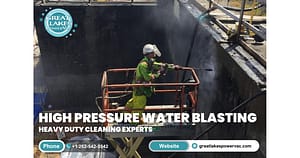
Water blasting techniques are something I genuinely believe in. Not because it sounds good on paper, but because I’ve watched them work on jobs where nothing else was cutting it. Thick rust sitting on steel for years. Grease packed into the drain lines so tightly that the pipes were basically useless. Old paint layers that looked impossible to strip without tearing the surface apart. Water blasting handled all of it. At Great Lakes Power Vac, this is bread and butter work for us & we’ve built up real experience doing it properly over many years.
So What Actually Is Water Blasting?
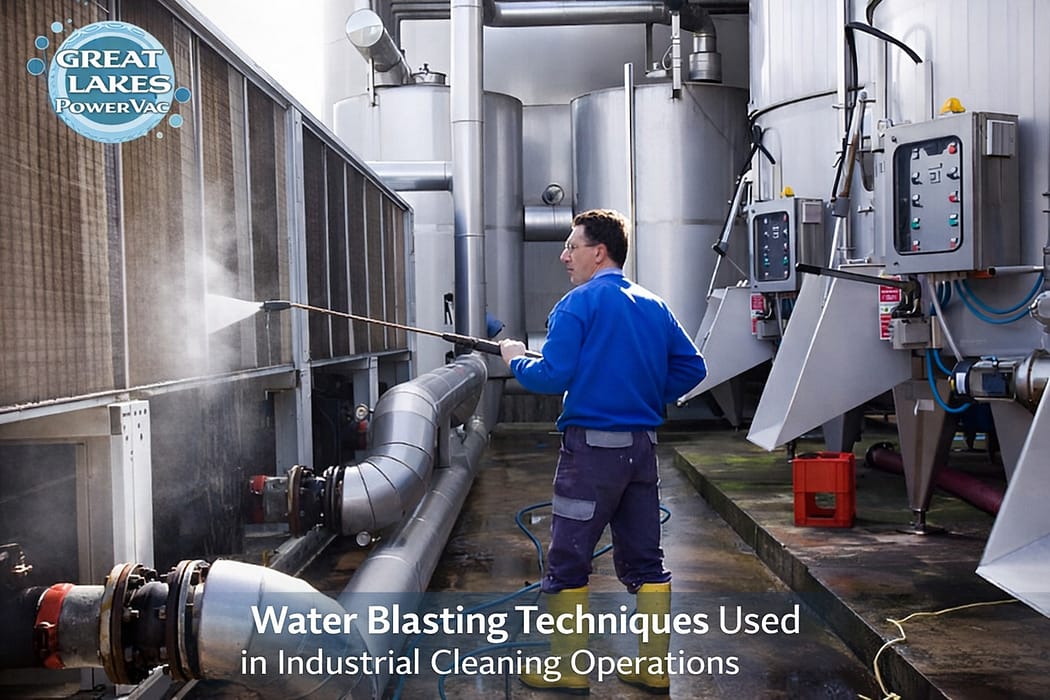
Water gets forced through a nozzle at very high pressure. That’s the whole idea. What comes out is a stream moving fast enough to rip rust, grime, old coatings, and built-up grease right off whatever surface you’re working on. No chemicals. No hours of manual scrubbing.
It works because pressure gives water real force behind it. A garden hose does nothing to industrial buildup. Push that same water through the right nozzle at the right PSI and it becomes a completely different tool. Industries figured this out decades ago and they haven’t stopped using it since.
Pressure Levels and Why They Matter
Not every job needs the same pressure. Using too little means the surface stays dirty. Using too much on the wrong material means you’ve now created a repair job on top of your cleaning job. Here’s a simple breakdown:
| Pressure Level | PSI Range | Common Use |
| Low Pressure | 100 – 5,000 PSI | Rinsing, soft washing |
| High Pressure | 5,000 – 10,000 PSI | General industrial cleaning |
| Ultra High Pressure | 10,000 – 25,000 PSI | Paint stripping, concrete prep |
| Water Jetting | 25,000+ PSI | Pipeline cleaning, heavy cutting |
This is where experience really counts. Knowing which pressure fits which surface isn’t something you figure out from a chart. You learn it from actually doing the work.
Water Blasting Techniques You’ll Actually See on Job Sites
These are the real methods used in industrial cleaning. Each one was developed because a specific type of problem kept coming up and needed a specific solution.
1. Wet Sandblasting
Sand gets mixed into the water stream. That combination is aggressive on metal surfaces in a way that plain water isn’t. Rust, mill scale, old paint layers; they come off. The water keeps airborne dust under control which makes the working environment much safer. Ship hulls, bridges, heavy steel structures — this is where you’ll see wet sandblasting being used most.
2. Hydro Jetting
This goes inside pipe systems. High-pressure water blasts through grease, mineral deposits, and compacted debris that’s built up inside drain lines and pipelines. It’s one of the most common calls we get at our industrial cleaning services page. A lot of facility managers are genuinely surprised by how blocked their lines are when we get in there. Systems that seemed fine were actually running at a fraction of their capacity.
3. Ultra High-Pressure Water Jetting
Above 25,000 PSI things get serious. This level of pressure handles coatings and scale that lower pressure can’t touch. Oil refineries run this. Shipyards run this. Places where equipment operates under extreme conditions and gentle cleaning just doesn’t cut it.
4. Rotating Nozzle Blasting
The nozzle spins while water shoots out. That rotation gives you wider, more even coverage across large flat surfaces. Storage tanks, warehouse floors, wide concrete walls. Instead of going back and forth slowly with a fixed nozzle, the rotating head covers ground faster and more consistently.
5. Surface Preparation Blasting
Paint and coatings need something clean to bond to. If the surface underneath has rust, old paint, or scale on it, the new coating won’t last. It’ll peel and you’ll be doing the job again in less than a year. Surface preparation blasting strips everything back to a clean base so whatever goes on next actually sticks and stays.
Industries That Use Water Blasting Regularly
Oil and Gas
Refineries deal with buildup inside tanks, heat exchangers, and pipeline systems constantly. It’s not optional maintenance. It’s necessary to keep things running safely. Water blasting gets into spaces that are hard to access any other way and clears them out properly.
Food Processing
A food plant can’t have chemical residue on surfaces that touch products. Water blasting removes grease and organic buildup completely and leaves nothing behind. It meets hygiene standards that chemical methods sometimes struggle with.
Construction
Concrete hardens fast. Equipment that doesn’t get cleaned after a pour ends up with buildup that’s very difficult to deal with later. Water blasting takes care of it quickly so tools and machinery stay in working shape.
Power Generation
Scale inside boilers and cooling towers builds up quietly. You don’t notice it until efficiency drops and energy costs go up. Regular blasting stops that from becoming a bigger and more expensive problem.
Why This Method Keeps Getting Chosen
No chemicals are a big deal for a lot of facilities. It removes the storage issue, the disposal issue, and the contamination risk all at once.
Speed matters too. Industrial surfaces that would take days of manual work get cleaned in a fraction of that time. That’s real money saved in reduced downtime.
The Water Jet Technology Association has tracked consistent growth in waterjet cleaning across industries. The reason is simple. It outperforms older methods and it does less environmental damage while doing it.
Water used on the job can often be captured and recycled. That keeps waste down on bigger projects.
Safety Has to Come First
I want to be straight with you about this. High-pressure water at industrial levels is not something to mess around with. It causes serious injuries when people get careless with it.
Full protective gear every single time. Gloves, goggles, waterproof clothing. Nobody points the nozzle anywhere near another person. Every connection and hose gets inspected before the job starts. Anyone not working the job stays out of the area.
The crew at Great Lakes Power Vac does a proper safety assessment on every site before anything starts. That’s not paperwork for the sake of paperwork. It’s how we make sure the job goes the way it’s supposed to without anyone getting hurt.
Which Method Fits Your Job
Here’s a practical guide:
- Light surface dirt or dust: low-pressure wash
- Heavy grease or oil buildup: high-pressure hot water blast
- Rust or old paint on metal: wet sandblasting or ultra high-pressure jetting
- Blocked pipes or drainage lines: hydro jetting
- Getting a surface ready for new coating: surface preparation blasting
When you’re genuinely not sure, ask someone with field experience before you start. Finding out you chose the wrong method halfway through a job is an expensive lesson.
FAQs
Q: Is water blasting the same as pressure washing?
A: They’re related but very different in scale. Pressure washing usually stays below 3,000 PSI. So, water blasting starts at around 10,000 PSI. The applications are completely different.
Q: Can it damage surfaces?
A: Wrong pressure on the wrong material can cause damage. So, that’s why having experienced people running the equipment matters.
Q: Is it safe for the environment?
A: Yes. No chemicals involved and the water can often be recycled. It’s one of the cleaner options in industrial cleaning.
Q: How often is it needed?
A: Depends on the facility and equipment. Many go quarterly or annually. Heavy-use equipment in tough conditions might need it more often than that.
Q: How long does a job take?
A: Smaller jobs take a few hours. Larger industrial sites can run a couple of days. Surface condition and total area are the main factors.
Conclusion
Water blasting techniques work and they work well. I’ve seen them turn surfaces that looked like write-offs into clean, properly prepped bases ready for coating or continued use. The key is matching the right technique to the right job and having people running the equipment who actually know what they’re doing. If your facility needs proper industrial cleaning, visit Great Lakes Power Vac and talk to a team that uses water blasting techniques on real jobs every single week.