Every industrial facility eventually runs into the same problem. Years of buildup, grease, scale, rust, old coatings, hardened residue, sits on surfaces that regular cleaning equipment simply cannot touch. Pressure washers from the hardware store bounce off it. Scraping by hand takes days and barely scratches the surface, literally.
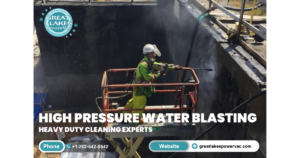
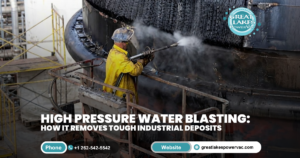
This is where high pressure water blasting comes in. It is not the same thing as the pressure washer in your garage. Industrial water blasting uses water pressures that can reach tens of thousands of PSI, enough to strip paint from steel, remove concrete laitance, clear blocked pipes, and clean equipment down to bare metal without damaging the surface underneath.
Great Lakes Power Vac provides this kind of heavy-duty cleaning to facilities that need results regular maintenance crews cannot deliver, and that distinction matters a lot once you understand what the process is actually capable of.
This guide covers how the process works, what it can be used for, and what to expect when you bring in a professional crew.
What High Pressure Water Blasting Actually Means
The term gets used loosely, so it helps to be specific. High pressure water blasting refers to using water forced through a specialized nozzle at extremely high pressure, typically anywhere from 10,000 to over 40,000 PSI, to remove material from a surface.
At lower pressures, water cleans by washing things away. At these much higher pressures, water itself becomes a cutting and stripping tool. It can cut through coatings, scale, and deposits that have bonded tightly to a surface, without using chemicals and without the abrasive media used in sandblasting.
This matters for a few reasons. No chemical runoff to deal with. No dust clouds from abrasive blasting. And because water does the work, the underlying surface, whether it is steel, concrete, or specialized equipment, is far less likely to be damaged compared to mechanical scraping or grinding.
What Surfaces and Materials Can Be Cleaned
The range of things high pressure water blasting can remove is genuinely broad. Here is a quick breakdown:
| Material to Remove | Typical Application |
| Old paint and coatings | Steel structures, tanks, bridges |
| Rust and scale | Pipes, storage tanks, structural steel |
| Concrete laitance | Floors before resurfacing or coating |
| Grease and oil buildup | Industrial floors, machinery, kitchens |
| Mineral deposits | Cooling towers, heat exchangers |
| Graffiti | Exterior walls, public infrastructure |
| Mold and biological growth | Exterior facades, tanks |
What makes water blasting different from sandblasting or chemical stripping is that the pressure can be adjusted to suit the job. A delicate surface that just needs light cleaning uses a lower pressure setting. A heavily scaled steel tank that needs to be stripped to bare metal uses a much higher setting. The flexibility is part of what makes the process so widely used.
Industries That Rely on High Pressure Water Blasting
Almost every heavy industry runs into surfaces that need this level of cleaning at some point. A few sectors stand out as regular users.
Manufacturing plants use water blasting to clean production equipment, remove buildup from tanks and vessels, and prep surfaces before recoating or repairing work.
Oil and gas facilities rely on it for tank cleaning, pipe descaling, and removing hydrocarbon residue from equipment during turnarounds and shutdowns.
Power generation plants use it to clean cooling towers, heat exchangers, and boiler components where mineral scale builds up over time and reduces efficiency.
Construction and infrastructure projects use water blasting to prepare concrete surfaces before applying new coatings, and to remove old line markings, coatings, or contamination from bridges and roadways.
Food and beverage facilities use it for deep cleaning of production floors and equipment where grease and organic buildup create both safety and hygiene concerns.
In every one of these settings, high pressure water blasting does the part of the job that routine cleaning crews are not equipped to handle.
Why Water Blasting Is Often Better Than the Alternatives
There are other ways to remove tough buildup, sandblasting, chemical stripping, mechanical grinding. Each has its place, but water blasting has some clear advantages worth knowing about.
No secondary waste stream from abrasives. Sandblasting generates large volumes of spent abrasive media that needs to be collected and disposed of. Water blasting produces wastewater, which is generally easier and cheaper to manage, especially with proper containment.
Less risk of surface damage. Mechanical grinding and aggressive abrasive blasting can remove base material along with the contaminant, especially on softer metals. Water pressure can be tuned to remove only what needs to come off.
No chemical exposure. Chemical stripping introduces its own handling, storage, and disposal requirements. Water blasting avoids that category of risk entirely.
Works in confined spaces. Pipes, tanks, and vessel interiors are difficult to access with abrasive blasting equipment. Water blasting lances and rotating nozzles are designed specifically for these tight spaces.
None of this means water blasting is always the right answer, sometimes a combination of methods works best. But for a huge range of industrial cleaning jobs, high pressure water blasting ends up being the most practical and cost-effective option once all the cleanup and disposal considerations are factored in.
Safety Considerations Worth Understanding
This is not a process anyone should attempt without proper training, and it is worth understanding why before hiring a crew.
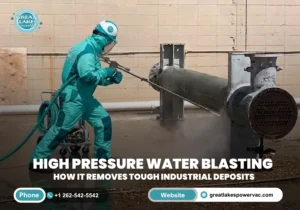
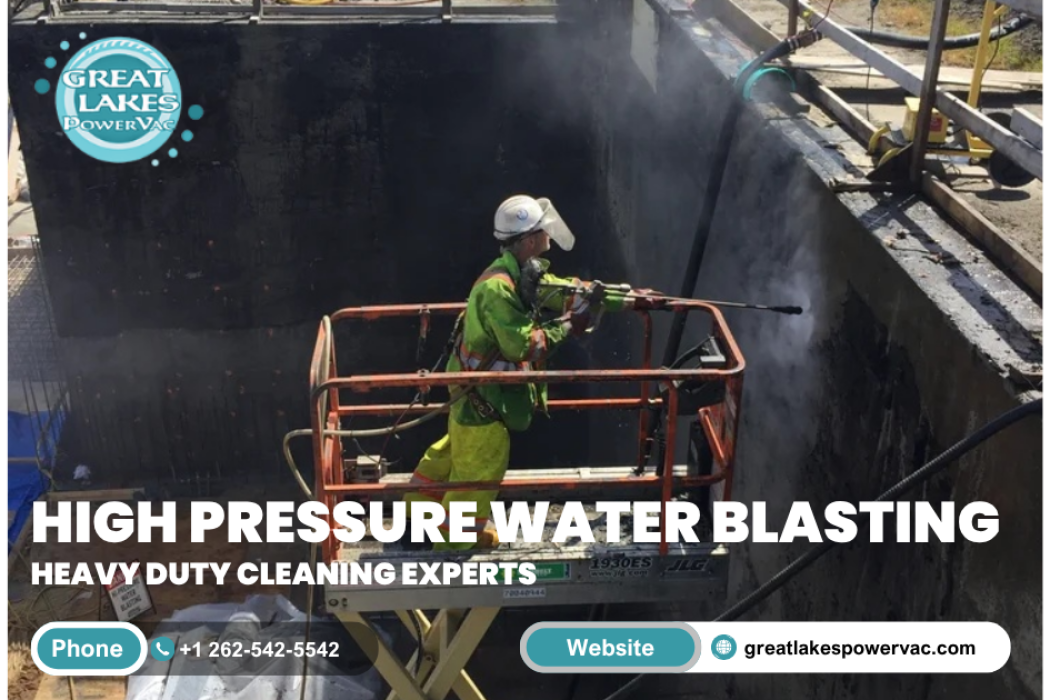
Water at these pressures can cut through more than rust and paint. A poorly handled lance can injure a person seriously, even through protective clothing in some cases. Professional crews use specific safety protocols, dead-man trigger systems, proper PPE, exclusion zones, and trained operators who understand how to control the equipment under load.
There is also the question of containment. Wastewater from a blasting job often contains the material that was removed, old paint with lead content, hydrocarbons, mineral scale. Depending on what is being cleaned, that water may need to be collected and disposed of properly rather than allowed to run into drains.
A reputable provider handles all of this as part of the job, not as an afterthought. This is one of the clearest reasons to bring in an experienced crew rather than attempting heavy-duty cleaning with rented equipment.
What to Expect From a Professional Service
If you are considering bringing in a contractor for high pressure water blasting, here is roughly what the process looks like from start to finish.
Initial assessment. A good provider will look at the surface, the material being removed, and the surrounding environment before quoting. Pressure settings, nozzle types, and containment needs all depend on this.
Containment setup. For jobs where runoff needs to be controlled, which is most industrial jobs, containment systems are set up before any blasting begins.
The blasting work itself. Depending on the scale of the job, this can range from a few hours for a small piece of equipment to several days for a large tank or structure.
Wastewater handling. Collected water is processed or disposed of according to what was removed and local regulations.
Final inspection. The surface is checked to confirm it has been cleaned to the required standard, particularly important if the next step is recoating or repair work.
Great Lakes Power Vac approaches jobs with exactly this structure, treating each site according to what it actually needs rather than applying a one-size-fits-all process.
Frequently Asked Questions
Q: How is high pressure water blasting different from a regular pressure washer?
A: Regular pressure washers typically run at a few hundred to a couple thousand PSI. Industrial water blasting equipment operates at 10,000 PSI or higher, often reaching tens of thousands of PSI for the toughest jobs.
Q: Can water blasting damage the surface underneath?
A: When done correctly, no. Pressure can be adjusted to match the surface and the material being removed, which is one of the main advantages over abrasive methods.
Q: How long does a typical job take?
A: It depends entirely on the size of the area and the level of buildup. Small jobs can take a few hours, while large tanks or structures may take several days.
Q: What happens to the wastewater from the job?
A: It is collected and handled according to what was removed and applicable regulations. This is typically managed by the contractor as part of the service.
Q: Can water blasting remove rust from steel completely?
A: Yes, at the right pressure setting, water blasting can strip rust down to bare metal, which is often required before repainting or applying protective coatings.
Conclusion
Some cleaning jobs just need more force than standard equipment can provide. Years of scale, old coatings, hardened grease, and rust do not respond to mops, scrapers, or consumer-grade pressure washers, and trying to force the issue with the wrong tools usually wastes time without getting real results.
High pressure water blasting exists for exactly these situations. It strips surfaces clean without chemicals, without abrasive waste, and without the surface damage that comes with aggressive mechanical methods. For industrial facilities, that combination of effectiveness and practicality is hard to match.
If your facility has surfaces, tanks, or equipment that need this level of cleaning, high pressure water blasting delivers results that routine maintenance simply cannot reach.