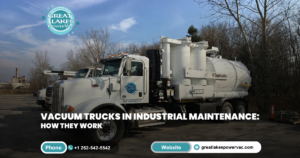
Vacuum trucks are one type of industrial equipment that most people have seen on job sites or roadsides. Very few would understand how much industrial maintenance depends on them, however. When a sewer line is blocked, when there is a spill that requires cleaning, when a tank is to be emptied, and when it is to clear a confined space of material before workers can enter safely.
The range of applications is wider than most people outside the industry realize. At Great Lakes Power Vac, vacuum trucks are central to the industrial maintenance services we provide and the results we deliver for clients who need thorough, safe, and efficient removal of liquids, sludge, solids, and hazardous materials from difficult locations.
What Vacuum Trucks Are and How They Work
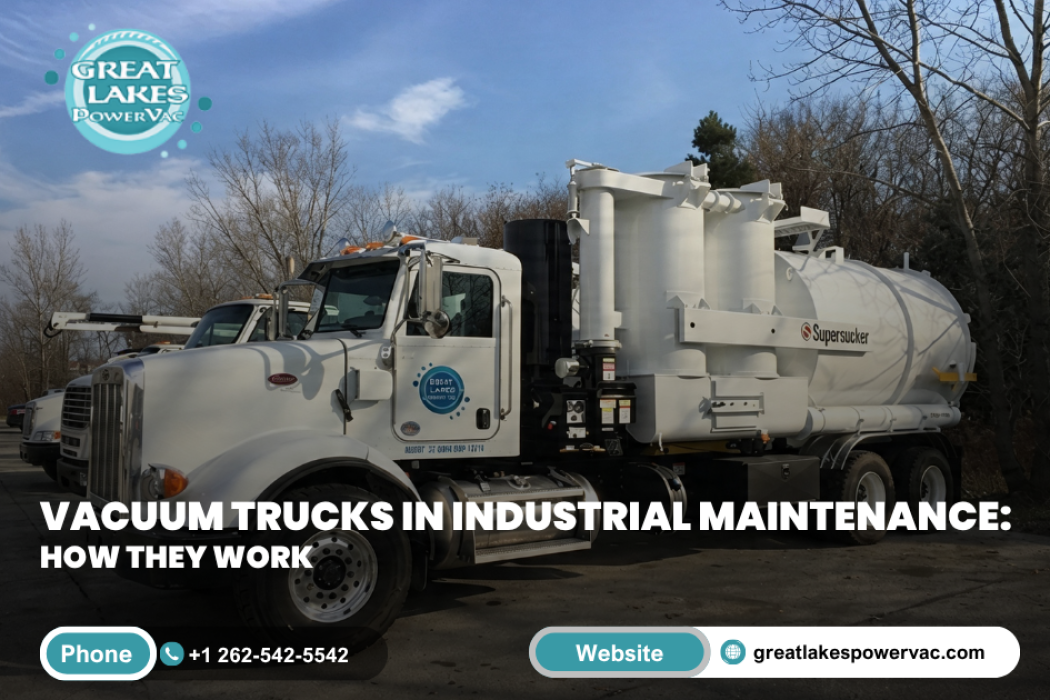
A vacuum truck is a specialized vehicle that has a vacuum system and storage tank attached. A vacuum system creates suction to draw material via a hose into the onboard tank. The collected material is accumulated in a tank until it can be taken to another suitable disposing facility.
The basic philosophy is like using a domestic vacuum cleaner but the scale of applicability is totally different. Industrial vacuum trucks possess the potential to generate vacuum pressures that can pull heavy sludge, thick slurries and compacted solids through equipment hoses over large distances and heights.
The mechanism through which vacuum is created depends on the design of the truck. Truck designs utilize positive displacement blowers, liquid ring pumps, and fan units all across the board. Everyone has substances that meet operating conditions in different characteristics.
The storage tank on a vacuum truck is usually made of carbon steel or stainless steel; the material selects depending on what the truck is designed to hold. Tank sizes can vary between small tanks with a capacity of a few hundred gallons to large industrial trucks that can hold several thousand gallons. The tank needs to sustain a vacuum pressure during filling and the weight of heavy materials collected.
Types of Vacuum Trucks Used in Industrial Maintenance
Different vacuum truck configurations serve different industrial maintenance applications. Moreover, understanding the main types helps clarify which situations call for which equipment.
Liquid Vacuum Trucks
Liquid vacuum trucks mainly process fluid wastes like wastewater, liquid chemicals, oil and water mix, and liquid waste produced from industries. So, common uses include septic tank pumping, lift station cleaning, chemical spill response, and industrial waste water removal.
Liquid vacuum truck tanks are equipped as per the chemical compatibility requirements of the substance they carry. However, tanks and hose materials on trucks that carry chemical waste must be resistant to aggressive chemicals.
Combination Hydro-Vac Trucks
High-pressure water jetting and vacuum suction are combined. So, the compacted material, soil or deposits is broken up by the water jet and the vacuum immediately takes away the material loosened. This combination works especially well for excavating around buried utilities cleaning drain lines and sewers and removing hardened deposits from industrial equipment.
At Great Lakes Power Vac, combination hydro-vac trucks are among our most frequently deployed equipment because the range of applications they handle covers so many different industrial maintenance needs in a single piece of equipment.
Industrial Vacuum Trucks for Dry Material
Some vacuum trucks are configured specifically for dry bulk materials including industrial dust, granular products, and dry solids. So, these trucks use different separator systems inside the tank to handle dry materials without the moisture that liquid vacuum systems are designed around.
Applications include recovery of spilled bulk materials, cleaning of industrial hoppers and silos, and removal of dry waste from manufacturing processes.
Key Applications of Vacuum Trucks in Industrial Maintenance
Vacuum trucks show up across a wide range of industrial maintenance tasks. Here are the applications where they deliver the clearest value.
| Application | What Vacuum Trucks Do |
| Tank cleaning | Remove sludge, residue, and accumulated solids from storage tanks |
| Sewer and drain maintenance | Clear blockages and remove accumulated material from pipe systems |
| Spill response | Rapid collection of liquid and solid spill material |
| Catch basin cleaning | Remove sediment and debris from drainage infrastructure |
| Confined space cleaning | Remove material from spaces too hazardous for manual entry |
| Industrial pit and sump cleaning | Empty accumulated liquid and solid waste from process pits |
| Utility excavation | Hydro-vac excavation around buried services |
| Hazardous waste removal | Safe collection and transport of regulated waste materials |
The common thread across all these applications is the ability to remove material from locations that are difficult, dangerous, or impossible to clean through manual methods. Moreover, vacuum trucks extend what’s achievable in industrial maintenance by making the physically difficult and the confined-space hazardous accessible and manageable.
How Vacuum Trucks Improve Safety in Industrial Maintenance
One of the key reasons industrial maintenance vacuum trucks get specified, rather than manual cleaning methods, is for safety.
Entry into confined spaces is very dangerous. Workers who manually clean tanks, pits and other enclosed vessels are exposed to atmospheric hazards, engulfment and limited means of escape during emergencies. Often, vacuum trucks are able to empty materials from confined spaces without needing workers to enter them. That reduction in confined space entry directly reduces the most serious injury and fatality risks in industrial maintenance.
According to theOccupational Safety and Health Administration, confined space fatalities occur at a significant rate in industrial environments and the majority involve workers who entered to rescue someone already in distress. So, remote removal of material using vacuum trucks reduces the frequency of necessary confined space entry across industrial maintenance operations.
Vacuum trucks also enhance safety outcomes through spill response activities. The swift containment and removal of spilled material ensures worker exposure to harmful industrial elements are controlled and is less harmful to the environment. When they arrive promptly and suck up spilled run-off, vacuum trucks reduce the safety and environmental impacts of contamination.
Operating Considerations for Vacuum Truck Work
To get the best results from vacuum truck operations, ensuring that you match the right job to the right vehicle is key, as is understanding all of the operational parameters that affect performance.
Dimension and length of the hose radically affect suction performance. Moreover, longer hose runs decrease vacuum pressure at collection point. Hoses of larger diameter require a larger vacuum capacity yet move bulk faster. Moreover, the right combination is dictated by what is collected and how far it must travel to reach the truck.
In choosing a truck configuration, the physical consistency of a material is an important factor. However, light liquids pump easily through long hose runs. Dense sludge requires a stronger vacuum and shorter hose distances. Solid material may need pre-conditioning with water jetting before vacuum collection is effective.
Tank capacity determines how often the truck needs to be emptied during a job. For large-volume collection tasks, larger tanks or multiple truck deployments reduce interruption to the cleaning operation.
Disposal logistics need to be planned before work begins. Collected material has to go somewhere. Depending on what was collected, disposal may involve licensed waste disposal facilities, treatment systems, or recycling processes. However, planning the full material chain from collection through disposal is part of responsible vacuum truck operation.
Great Lakes Power Vac plans every vacuum truck job with disposal logistics as part of the initial scope. Collecting material efficiently is only part of the job. Managing it correctly afterward is equally important.
FAQs
Q: What is the total capacity of a vacuum truck collected in a load?
A: The capacity tanks of each size vehicle could be around 500 gallons on the smaller units, while large industrial trucks are over 5,000 gallons. The size of the tank should depend on the volume of materials to be collected and constraints of access at the site.
Q: Can vacuum trucks be used for hazardous waste?
A: Yup, sure! Waste vacuum trucks are made with special seals and materials which will prevent contamination in hazardous waste trucking moves. Moreover, those who use and handle hazardous materials must have the required permits and training.
Q: How far can material be vacuumed through a hose?
A: Effective hose distances vary with material type and truck vacuum capacity. Typical working distances for liquids run up to several hundred feet. So, dense or solid materials require shorter distances for effective suction.
Q: Are vacuum trucks suitable for emergency spill response?
A: Yes. Many industrial vacuum truck operators maintain emergency response capability for rapid deployment to spill incidents. However, response time and available capacity vary between providers.
Q: Do vacuum trucks work on completely dry solid material?
A: Specific dry vacuum truck configurations handle dry bulk solids effectively. Standard liquid vacuum trucks work best with materials that have some moisture content. So, combination hydro-vac trucks add water to condition dry material for collection.
Q: How often should industrial tanks and sumps be cleaned with vacuum trucks?
A: Cleaning frequency depends on what the tank holds and how quickly material accumulates. Regularly scheduled cleaning prevents accumulation that creates operational problems and safety hazards. So, many facilities establish annual or biannual cleaning schedules for critical vessels.
Conclusion
Essentially, vacuum trucks are an industrial maintenance tool enabling the safe and effective removal of other liquids, sludge, solids and unsafe or hazardous materials from an extensive range of applications that cannot be manually or safely dealt with. Moreover, improvements in safety outcomes, damage downtime and waste management are all made possible by the capability vacuum trucks bring to industrial maintenance operations. Which includes tank cleaning, sewer cleanup, spill response and confined space cleaning.
Selecting the most suitable truck configuration for the task at hand along with preparing the entire material handling chain from collection right through to disposal determines how much a vacuum truck operation achieves its objectives. If your facility needs vacuum truck services for industrial maintenance work, visit Great Lakes Power Vac and talk to a team that deploys vacuum trucks on industrial maintenance jobs every day and understands what it takes to get the work done properly.