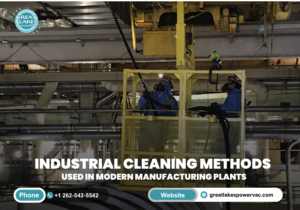
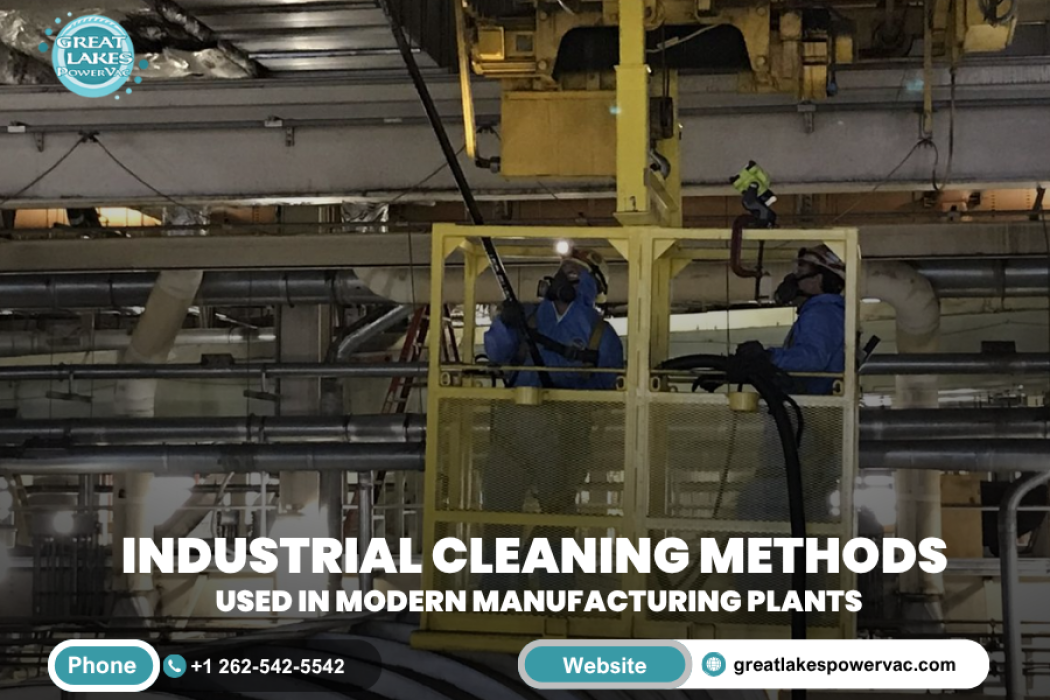
Industrial cleaning methods are something manufacturing plant managers think about constantly, even when things are running smoothly, because the moment cleaning gets neglected, the consequences show up quickly in equipment performance, product quality, and safety incident rates. I’ve walked through manufacturing facilities where cleaning was clearly treated as an afterthought, and the evidence was everywhere. Scale buildup reduces heat exchanger efficiency. Grease accumulation is creating slip hazards on walkways. Residue contaminating downstream processes. Dust sitting on surfaces in quantities that created a genuine explosion risk.
None of it happened overnight. It accumulated gradually while other priorities took up management attention. At Great Lakes Power Vac, industrial cleaning is our core business and we’ve worked in enough manufacturing environments to know exactly what happens when the right methods get applied consistently versus what develops when they don’t.
Why Industrial Cleaning Methods Matter in Manufacturing
Manufacturing plants function under conditions that continuously produce contaminations. Machining operations generates chips and cutting fluids. Equipment surfaces are coated as a result of chemical processes. When heat exchangers accumulate scale, they reduce the thermal effectiveness of the heat exchanger. Greases and solids are accumulated and blockages is formed. Dust produced by processing operations settles on all of the accessible surfaces.
Allowing that contamination to build up has other ramifications besides housekeeping. When heat exchangers scale, it causes them to consume more energy. Eventually, this causes parts of the equipment to fail. When the drain systems become blocked by grease, this creates production and compliance problems. Fires and explosions have occurred at storage facilities in various sectors due to dust accumulation over the years.
When undertaking industrial and commercial cleaning, you need the right tools for the job. Whether it’s a warehouse, a construction site, or other general workplace, effective cleaning requires the correct equipment. As your cleaning solution, we offer the best industrial vacuum cleaner for sale.
Main Industrial Cleaning Methods Used in Manufacturing Plants
Cleaning processes in a contemporary manufacturing plant vary by what’s to be cleaned, what’s contaminating it, and what limitations there are on chemicals, water use, and downtime.
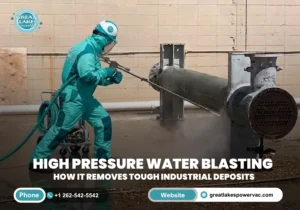
High Pressure Water Blasting
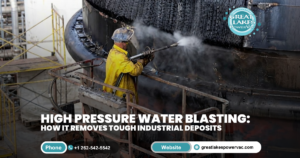
High-pressure water blasting employs a pump to push water through a nozzle at a very high velocity.
Most applications do not require chemical additives as the concentrated water stream eliminates scale, deposits, old coatings, grease, biological material and much more from surfaces.
There are different pressure levels for that from about 5,000 PSI for standard industrial washing, to 40,000 PSI and higher for ultra high pressure surface preparation work. The correct application pressure is determined by what is being removed as well as the underlying material.
Water blasting is often applied for heat exchanger cleaning, storage tank interior cleaning, pipe descaling, drain and sewer cleaning, and surface preparation of structural steel for coating. Moreover, it creates no dust, produces no abrasive material to dispose of, and leaves no chemicals on the surface once cleaned.
At Great Lakes Power Vac, high-pressure water blasting is one of our most frequently deployed industrial cleaning methods across manufacturing and processing facilities. So, the combination of effectiveness and environmental cleanliness makes it the right choice for a wide range of manufacturing cleaning applications.
Industrial Vacuum Cleaning
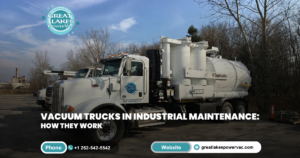
Industrial vacuum systems employ suction for the removal of both dry and wet materials from surfaces, vessels, pipes, and confined spaces. Configurations on vacuum trucks and portable industrial vacuum equipment dictate the type of material handled, from fine dusts to dense sludge.
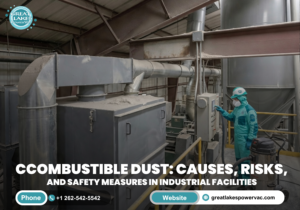
Cleaning up dust using a vacuum cleaner helps prevent combustion in factories. Blowing dust off or sweeping dust off generates an airborne concentration that is a source of explosion. However, industrial vacuum systems remove and extract dust without creating dangerous environments.
Industrial vacuum techniques use either alone or in combination with water blasting for jobs like tank cleaning, sump cleaning, catch basin maintenance and removal of solids from processing equipment.
Chemical Cleaning
Chemical cleaning is the use of specialist formulated cleaning agents that will dissolve, disperse or loosen deposits that can’t be removed by mechanical means. Moreover, acid cleaning eliminates mineral scale and oxide build-up. However, Alkaline cleaners eliminate fats, oils, and organic matter. Solvent-based cleaners tackle contamination types that water-based chemistry has difficulty addressing.
Chemical cleaning refers to cleaning of heat exchanger tubes, boiler descaling, pipeline passivation and cleaning of process equipment, which is carried out with the right chemistry for the removal of specific deposit types without damaging base material.
The need to manage the chemical cleaning agents makes it more costly and complex, compared to a water-based approach. Chemical cleaning is most suited for application when the deposit type or the equipment geometry prohibit any mechanical methods.
Dry Ice Blasting
Dry ice blasting propels pellets of solid carbon dioxide at surfaces using compressed air. Moreover, on impact the dry ice sublimates immediately, leaving no cleaning residue. So, the combination of kinetic impact and the thermal shock of the extremely cold dry ice breaks contamination away from surfaces.
This method is used for cleaning electrical equipment and sensitive electronics that can’t tolerate moisture, for removing coatings and adhesives from production tooling, and for food processing equipment cleaning where water and chemical residue create contamination concerns.
Abrasive Blasting
Abrasive blasting propels abrasive media against surfaces to remove rust, scale, old coatings, and surface contaminants. Various abrasive media get used depending on the surface material and the required surface profile including steel shot, garnet, and specialized recyclable media.
Abrasive blasting is primarily used for surface preparation before protective coating application on structural steel, vessels, and pipelines. So, the dust generated requires containment and the abrasive media requires disposal or recovery depending on the system used.
Comparing Industrial Cleaning Methods
Here is a practical comparison of the main methods across key factors relevant to manufacturing facility applications:
| Method | Best For | Chemical Use | Residue | Dust Risk | Cost Level |
| High Pressure Water Blasting | Scale, deposits, coatings, drains | None typically | Water only | None | Moderate |
| Industrial Vacuum | Dust, sludge, tank cleaning | None | None | None | Moderate |
| Chemical Cleaning | Specific deposit chemistry | Yes | Requires disposal | Low | Moderate to High |
| Dry Ice Blasting | Sensitive equipment, electronics | None | None | Low | High |
| Abrasive Blasting | Surface prep, rust removal | None | Abrasive waste | High | Moderate to High |
According to the Association for Facilities Engineering, preventive maintenance cleaning programs that use appropriate methods for specific applications consistently reduce equipment downtime and extend asset service life compared to reactive cleaning approaches that only address problems after performance has already degraded.
Choosing the Right Industrial Cleaning Method
Selecting the appropriate industrial cleaning method for a specific application requires honest assessment of several factors.
Deposit type is the primary consideration. Mineral scale responds best to chemical descaling or high-pressure water blasting. Grease and organic deposits respond to hot water blasting or alkaline chemical cleaning. Combustible dust requires vacuum methods that don’t create airborne concentrations. So, old coatings on steel respond to abrasive or ultra-high-pressure water blasting.
Surface material constrains which methods are safe. Soft metals, plastics, and coated surfaces can’t tolerate the pressures that work well on hard steel. Sensitive electronics can’t tolerate moisture. Moreover, knowing what the surface can handle narrows the method options quickly.
Environmental and regulatory constraints affect chemical use, water disposal, and dust management requirements. Manufacturing facilities with strict environmental permits may need to limit chemical cleaning or capture and treat water blasting runoff.
Access and geometry affect which methods are physically practical. Narrow passages and complex internal geometries limit what equipment can reach. However, confined spaces require methods and equipment compatible with confined space entry requirements.
Great Lakes Power Vac assesses all of these factors before recommending a cleaning approach for a specific manufacturing facility application. Getting the method right before mobilizing equipment prevents the costly outcome of deploying the wrong approach and having to remobilize with different equipment.
Scheduled vs Reactive Industrial Cleaning
Manufacturing facilities approach industrial cleaning in two fundamentally different ways and the financial outcomes of those approaches are very different.
Reactive cleaning addresses contamination after it has already caused a problem. A heat exchanger that’s lost significant efficiency gets cleaned after the energy cost has already accumulated for months. Moreover, a drain that’s completely blocked gets cleared after it has disrupted production. This approach consistently costs more than scheduled cleaning because the contamination has had time to harden and accumulate to levels that require more intensive intervention.
Scheduled cleaning addresses contamination before it reaches levels that affect performance or safety. So, cleaning intervals based on actual accumulation rates keep equipment operating within normal parameters and avoid the emergency cleaning costs and production disruptions that reactive approaches generate.
Most manufacturing facilities that calculate the true cost of their reactive cleaning approach find that a scheduled program based on the right methods for each application costs less in total even though it feels like spending money on something that isn’t visibly broken yet.
FAQs
Q: How often should manufacturing plant equipment be cleaned?
A: Cleaning frequency should be based on how quickly contamination accumulates in the specific operating environment rather than arbitrary calendar intervals. High-production environments with significant dust or deposit generation may need weekly or monthly attention on critical equipment.
Q: Is high pressure water blasting safe for all manufacturing equipment?
A: Not for all equipment. Pressure selection needs to match the surface material and deposit type. So, sensitive equipment, electrical components, and soft materials require lower pressures or alternative methods.
Q: Can industrial cleaning methods be used during production?
A: Some methods and applications allow cleaning during production with appropriate isolation. Others require equipment shutdown. Planning cleaning around production schedules minimizes downtime impact.
Q: What is the environmental impact of industrial cleaning operations?
A: It varies by method. Water blasting generates wastewater that may require treatment before disposal. Chemical cleaning generates chemical waste. Vacuum cleaning and dry ice blasting produce minimal environmental waste. Proper planning addresses disposal requirements for any method used.
Q: How do I know which industrial cleaning method is right for my facility?
A: An assessment by an experienced industrial cleaning contractor who has worked in similar manufacturing environments is the most reliable way to get the right method recommendation for your specific contamination types and equipment.
Q: Are industrial cleaning contractors responsible for waste disposal?
A: Reputable industrial cleaning contractors include waste disposal planning as part of their service scope. Confirm waste handling and disposal responsibilities before work begins.
Conclusion
Manufacturing plants use industrial cleaning methods when necessary to prevent equipment performance problems, safety violations, and regulatory issues. High pressure water blasting, industrial vacuum cleaning, chemical cleaning, dry ice blasting and abrasive blasting all have their unique applications best suited where they offer the best mix of efficiency, safety and cost effectiveness. Using the right method for the right application, along with scheduled cleaning programs rather than reactive, will always result in a better plant performance and total maintenance cost.
Facilities that effectively manage their cleaning strategies experience improved reliability in operations, reduced expenditures on emergency interventions, and possess lower risk levels concerning safety and compliance compared to counterparts that regard cleaning as an afterthought. If your manufacturing facility needs industrial cleaning services that match the right methods to your specific applications, visit Great Lakes Power Vac and talk to a team that applies industrial cleaning methods across manufacturing environments every single day with the expertise and equipment to get the work done properly.